
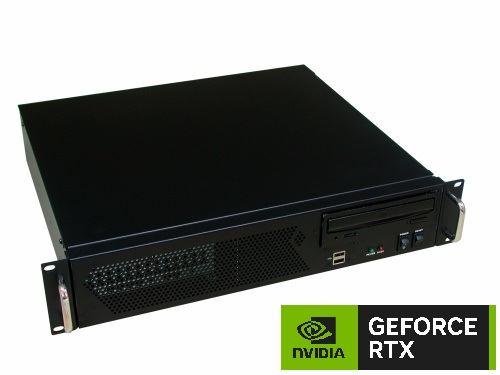
Rack mount systems are a foundational element of modern computing and industrial infrastructure, providing a standardized, efficient, and highly scalable way to organize servers, industrial computers, networking equipment, and control systems. They are widely deployed across data centers, manufacturing plants, telecommunications facilities, automation environments, and mission‑critical operations where reliability, structured organization, and long‑term performance are essential. Understanding what a rack mount system is—and why it is used—helps organizations design infrastructures that are both powerful and adaptable to future growth.
Understanding the Rack Mount Standard
A rack mount system is any computer or electronic device designed to fit into a standardized equipment rack, most commonly the 19‑inch rack used throughout IT, industrial automation, and telecommunications. While the width of the equipment remains consistent, the height is measured in rack units, or “U,” where one rack unit equals 1.75 inches. Equipment is typically available in sizes such as 1U, 2U, 3U, and 4U, with larger units offering more internal space for expansion cards, storage drives, cooling systems, and high‑performance components.
For example, a 1U firewall, a 2U industrial controller, and a 4U GPU‑accelerated AI server can all be installed in the same rack, allowing a business to consolidate multiple systems into a single, organized enclosure. These systems slide into the rack using mounting brackets or rails, enabling technicians to install, remove, or service equipment without disrupting the rest of the infrastructure.
Why Rack Mount Systems Are Used
Rack mount systems are preferred in industrial and commercial environments because they offer significant advantages in space efficiency, organization, cooling performance, and scalability. By consolidating equipment into a single rack, organizations can centralize power distribution, cooling airflow, and cable routing, which simplifies maintenance and reduces operational complexity.
The vertical stacking design saves valuable floor space, especially in environments where dozens or even hundreds of systems must operate simultaneously. Rack mount systems are engineered for optimized airflow, typically using front‑to‑back cooling that aligns with data center ventilation patterns. This ensures stable thermal performance for high‑power CPUs, GPUs, and storage arrays, even under continuous workloads.
For instance, a data center running high‑density compute clusters may rely on 1U and 2U servers arranged in hot‑aisle/cold‑aisle configurations to maintain consistent cooling. Meanwhile, a manufacturing plant might use ruggedized 4U industrial computers with dust‑resistant filters and reinforced chassis to withstand vibration and airborne particles.
Core Components of a Rack Mount System
Rack Frame
The rack frame is the structural foundation that holds all mounted equipment. Open‑frame racks offer maximum accessibility and airflow, making them ideal for labs and test environments, while enclosed cabinet racks provide security, noise reduction, and environmental control for data centers and industrial facilities.
Mounting Rails
Rails support the equipment and allow devices to slide in and out for installation or maintenance. Many servers use sliding rails that let technicians pull the system out like a drawer, making it easier to replace components without removing the entire unit.
Cooling and Ventilation
Proper cooling is essential in high‑density environments. Racks often include perforated doors, integrated fans, or dedicated cooling systems. For example, a rack designed for GPU‑intensive AI workloads may include high‑capacity fans and directional airflow channels to maintain stable temperatures.
Power Distribution Units (PDUs)
PDUs distribute power safely and efficiently to all devices in the rack. Advanced PDUs may include surge protection, remote monitoring, and load balancing. A smart PDU can alert administrators when a circuit is nearing capacity, preventing unexpected shutdowns.
Cable Management
Cable trays, hooks, and channels keep cables organized and accessible. Structured cable management improves airflow, reduces clutter, and simplifies troubleshooting. A well‑designed rack might include color‑coded cables to distinguish between network, power, and storage connections.
Security Features
Enclosed racks often include lockable doors, side panels, and access control systems. Organizations handling sensitive data may use biometric locks or keycard access to restrict physical entry.
Industrial‑Grade Rack Mount Systems
In industrial environments, rack mount systems are often built with rugged features to withstand harsh conditions. These may include heavy‑duty steel chassis, shock and vibration resistance, wide‑temperature components, and dust‑resistant designs. Many industrial rack mount computers also support legacy ports such as RS‑232/422/485, CAN bus, or GPIO, which remain essential in automation and control systems.
For example, a transportation hub may deploy a 3U industrial computer with vibration‑resistant mounting and multiple serial ports to interface with sensors, PLCs, and monitoring equipment. A military application might require a 4U ruggedized system with reinforced shock protection and extended‑temperature components for field deployment.
Types of Rack Mount Systems
1U Systems
Compact and efficient, 1U systems are commonly used for networking, firewalls, lightweight industrial control tasks, and high‑density compute clusters.
2U–4U Systems
Larger systems offer more internal space for expansion cards, high‑performance processors, GPUs for AI or machine vision, and multiple storage bays. A 4U system might house several PCIe cards, redundant power supplies, and hot‑swap drive bays for mission‑critical applications.
Industrial‑Grade Systems
These systems incorporate ruggedized components and environmental protections, making them suitable for manufacturing plants, energy facilities, transportation systems, and military operations.
Where Rack Mount Systems Are Used
Rack mount systems are used across a wide range of industries, including:
- Industrial automation and process control
- Security and surveillance
- Telecommunications and networking
- Logistics and transportation
- Data processing and cloud computing
- Energy and utilities
- Military and aerospace
Their versatility makes them a reliable choice for centralized control, high‑density computing, and continuous operation in demanding environments.
How to Choose the Right Rack Mount System
When selecting a rack mount system, several technical factors must be considered to ensure long‑term performance and compatibility with operational requirements.
Key considerations include:
- Rack unit size (1U–4U) and available internal space
- CPU and GPU performance requirements
- Number and type of PCIe expansion slots
- Storage capacity, RAID support, and hot‑swap drive bays
- Cooling design and airflow direction
- Power supply redundancy and voltage requirements
- Environmental factors such as temperature, dust, and vibration
For example, an AI‑driven machine vision system may require a 4U chassis with multiple GPUs and high‑speed NVMe storage, while a network operations center might prioritize 1U systems for maximum density and efficient cable routing.
Why Rack Mount Systems Remain Essential
Rack mount systems continue to be a cornerstone of modern industrial and commercial computing because they combine durability, scalability, and efficient organization. Their standardized design allows businesses to build flexible infrastructures that can grow with their needs, whether deploying automation systems, data acquisition platforms, or high‑performance computing clusters.
Explore Rackmount Systems from Acnodes Corporation
For organizations seeking reliable, industrial‑grade rack mount solutions, Acnodes Corporation offers a comprehensive selection of rackmount computers engineered for demanding environments. Their systems feature rugged steel construction, wide‑temperature components, customizable I/O options, and support for both legacy and modern interfaces. Whether you need a compact 1U system for networking tasks or a high‑performance 4U platform for automation, AI processing, or data acquisition, Acnodes provides configurable solutions designed to meet the needs of industrial, military, and commercial applications.